
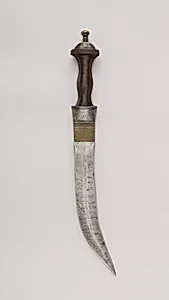
Dagger
Unknown Artist
18th–19th century
Medium
Steel, brass, wood, copper
Dimensions
H. 12 1/2 in. (31.8 cm); W. 1 7/16 in. (3.7 cm); Wt. 4.1 oz. (116.2 g)
Classification
Daggers
Culture
Indian
Department
Arms and Armor
Museum
Metropolitan Museum of Art, New York, NY
Credit
Edward C. Moore Collection, Bequest of Edward C. Moore, 1891
Accession Number
91.1.901
Rights
Public Domain
Art Historical Context
This elegant Indian dagger, dating to the 18th–19th century, exemplifies the exquisite craftsmanship of South Asian arms and armor. Crafted from steel, brass, wood, and, it measures just 12½ inches in height and weighs a mere 4.1 ounces, making it a compact yet formidable weapon suited for close combat or concealed carry. The combination of materials suggests both functionality and ornamentation, with steel likely forming the sharp blade, brass and copper adding decorative accents, and wood providing a comfortable grip. In Indian culture during this period, daggers like this were essential tools for self-defense, warfare, and even ceremonial display, reflecting the region's rich martial traditions amid the Mughal Empire's decline and the rise of regional powers. Such weapons often blended utilitarian design with artistic flair, symbolizing status and skill. This piece entered the Metropolitan Museum of Art through the Edward C. Moore Collection in 1891, highlighting 19th-century Western fascination with Eastern artistry. Today, it invites visitors to appreciate the dagger's balance of lethality and beauty, a testament to the anonymous artisans who fused metallurgy and aesthetics in everyday objects of power.