
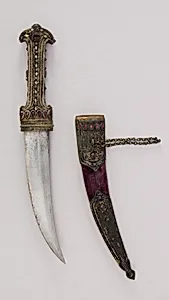
Dagger (Jambiya) with Sheath
Unknown Artist
18th–19th century
Medium
Steel, silver, stone
Dimensions
H. with sheath 12 3/4 in. (32.4 cm); H. without sheath 11 1/8 in. (28.3 cm); H. of blade 6 5/8 in. (16.8 cm); W. 1 11/16 in. (4.3 cm); Wt. 5 oz. (141.7 g); Wt. of sheath 2.9 oz. (82.2 g)
Classification
Daggers
Culture
Maltese
Department
Arms and Armor
Museum
Metropolitan Museum of Art, New York, NY
Credit
Bequest of George C. Stone, 1935
Accession Number
36.25.769a, b
Rights
Public Domain
Art Historical Context
This exquisite Jambiya dagger with sheath, crafted in the 18th–19th century by an unknown Maltese artisan, exemplifies the blend of functionality and ornamentation in Mediterranean arms and armor. Measuring 12¾ inches with its sheath, the steel blade—6⅝ inches long—curves gracefully in the traditional Jambiya form, a style with roots in Arab-influenced regions that reached Malta through centuries of trade, conquest, and cultural exchange under the Knights Hospitaller and Ottoman pressures. The hilt and sheath feature silver mounts and stone inlays, highlighting skilled metalworking techniques that elevated such weapons beyond mere tools of defense into symbols of status and craftsmanship. In Maltese culture, daggers like this were prized possessions for elites, often worn as part of ceremonial dress, reflecting the island's strategic role as a crossroads of European, North African, and Levantine influences. Today, this piece from the Metropolitan Museum of Art's Arms and Armor collection—bequeathed by George C. Stone in 1935—invites us to appreciate how everyday objects carried profound cultural weight, showcasing the artistry of an era when beauty and lethality intertwined.