
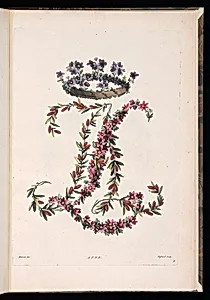
Decorative Monogram Design
ca. 1780
Classification
ornament
Department
Smithsonian Collection
Museum
Smithsonian American Art Museum
Credit
Purchased for the Museum by the Advisory Council
Accession Number
1921-6-401-8
Rights
Public Domain
About this artwork
Research in Progress
Art Historical Context
Pierre Ranson’s *Decorative Monogram Design* offers a charming glimpse into the refined ornamental tastes of late eighteenth-century France. Created around 1780, the work reflects the elegant sensibilities of the period just before the French Revolution, when monograms and personalized motifs adorned everything from furniture and textiles to porcelain and architectural details. As a French artist active during the transition from Rococo exuberance to the emerging Neoclassical restraint, Ranson specialized in such decorative patterns that both aesthetic and practical purposes for craftsmen and patrons. Classified simply as “ornament,” this piece highlights how artists of the era contributed to the broader decorative arts tradition. Monogram designs like this one allowed for customization while maintaining harmonious proportions and graceful lines suited to the refined interiors of the time. Though research on the specific medium and intended application remains ongoing, the Smithsonian American Art Museum’s acquisition through Advisory Council underscores the enduring value of these preparatory or pattern works in understanding eighteenth-century visual culture. Visitors can appreciate how Ranson’s careful arrangement of letters transforms a personal mark into an artistic statement, illustrating the period’s blend of individuality and decorative elegance.