
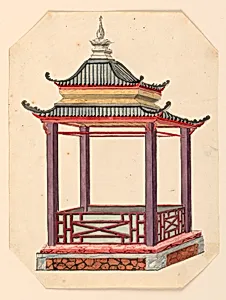
Design for a Chinese Pavilion
Classification
architecture
Department
Smithsonian Collection
Museum
Smithsonian American Art Museum
Credit
Museum purchase through gift of Mrs. John Innes Kane
Accession Number
1948-40-85
Rights
Public Domain
About this artwork
Research in Progress
Art Historical Context
Frederick Crace (1779–1859), a prominent English designer from a renowned family of decorators, created this *Design for a Chinese Pavilion between 1815 and1822. As part of the Crace dynasty, which supplied ornate interiors for British royalty and grand estates, Frederick specialized in elaborate wallpapers, furnishings, and architectural ornamentation. This work, classified as architecture and now in the Smithsonian American Art Museum's collection (purchased through the gift of Mrs. John Innes Kane), reflects the Regency-era fascination with exoticism. The design embodies Chinoiserie, Europe's whimsical interpretation of Chinese aesthetics that peaked in the 18th and early 19th centuries. Pavilions like this—often garden follies or decorative structures—allowed the British elite to evoke distant lands amid their landscapes, blending fantasy with craftsmanship. Though the medium remains unidentified (research ongoing), such designs typically involved detailed ink, watercolor, or gouache on paper, showcasing intricate motifs like pagodas, lattices, and floral scrolls. Crace's piece highlights a cultural bridge between East and West, underscoring how global trade and colonial encounters inspired British decorative arts. Imagine strolling a manicured estate, stumbling upon this pavilion as a playful escape— a testament to the era's blend of opulence and imagination.