
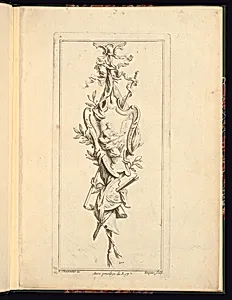
Design for a Pendant Trophy
Classification
Department
Smithsonian Collection
Museum
Smithsonian American Art Museum
Credit
Purchased for the Museum by the Advisory Council
Accession Number
1921-6-519-2
Rights
Public Domain
About this artwork
Research in Progress
Art Historical Context
**Design for a Pendant Trophy by René Charpentier (French, 1680–1723) offers a glimpse into the ornate world of 18th-century French decorative arts. Dated around 1736—likely a posthumous or workshop production—this print captures Charpentier's skill as a designer of luxury objects. Though the exact medium remains under study, its classification as a print highlights how such works served as blueprints for jewelers and goldsmiths, disseminating intricate motifs across workshops. In the opulent era of Louis XV, pendant trophies like this one symbolized prestige, often adorning jewelry or architectural elements with trophies of allegorical figures, laurels, or classical motifs. Charpentier's design exemplifies the transition from Baroque grandeur to emerging Rococo elegance, blending symmetry with playful embellishment. Prints were vital tools then, allowing artists to share ideas precisely and economically, influencing Europe's elite craftsmanship. Housed in the Smithsonian American Art Museum's collection—purchased by the Advisory Council—this piece underscores transatlantic appreciation for French ornamental mastery. As research continues, it invites us to ponder the artistry behind wearable splendor, bridging design innovation and cultural aspiration.