
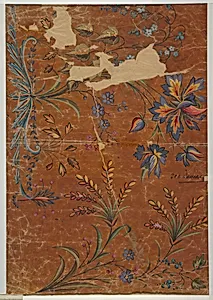
Design for an Embroidered or Woven Horizontal Border
1815-1840
Classification
Drawing
Department
Smithsonian Collection
Museum
Smithsonian American Art Museum
Credit
Gift of Eleanor and Sarah Hewitt
Accession Number
1909-13-64
Rights
Public Domain
About this artwork
Research in Progress
Art Historical Context
This delicate drawing, titled *Design for an Embro or Woven Horizontal Border dates to the early 19th century (5-1840) and captures the elegance of American textile design during a transformative era. Created by an unknown artist, it as a blueprint for decorative borders—repeating motifs likely intended for fabrics like table linens, curtains, or garments. This period saw a blossoming of domestic arts in the United States, influenced by neoclassical tastes and the growing availability of imported patterns from Europe, as Americans crafted their own versions amid expanding textile manufacturing. As a preparatory drawing, the work highlights the meticulous planning behind embroidery and weaving techniques, where intricate lines would guide needlework or loom patterns. Such designs were essential for adorning middle-class homes, reflecting cultural values of refinement and craftsmanship. Horizontal borders provided rhythmic visual interest, often featuring floral, geometric, or architectural elements that evoked symmetry and harmony. Now part of the Smithsonian American Art Museum's collection—generously gifted by Eleanor and Sarah Hewitt—this piece awaits further research, offering visitors a glimpse into the unsung artistry of everyday ornamentation. It reminds us how anonymous creators shaped the beauty of American life.
About the Artist
Unknown
The artist designated as "Unknown" in our virtual museum's collection exemplifies a poignant chapter in art history: creators whose identities have faded into obscurity despite the enduring power of their work. With only one known artwork attributed to them in our holdings, this figure represents countless anonymous hands that shaped visual culture across centuries. Museums worldwide, including th...