
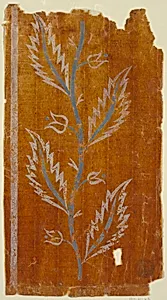
Design for an Embroidered or Woven Vertical Border
1805–1815
Classification
Drawing
Department
Smithsonian Collection
Museum
Smithsonian American Art Museum
Credit
Gift of Eleanor and Sarah Hewitt
Accession Number
1914-21-62
Rights
Public Domain
About this artwork
Research in Progress
Art Historical Context
This delicate drawing, titled *Design for an Embro or Woven Vertical Border dates to the early 19th century (5–1815) and hails from the Smithsonian American Art Museum's collection. Created by an unknown artist, it serves as a pattern for textile embellishment—likely intended for garments, upholstery, or architectural drapery. As a preparatory sketch in an unspecified medium, it exemplifies the meticulous planning behind decorative arts, where borders framed everyday luxuries and elevated domestic spaces. In the young American Republic, such designs reflected a burgeoning interest in elegant home furnishings amid growing textile production and needlework traditions. Vertical borders were versatile motifs, adding height and rhythm to fabrics, often echoing neoclassical symmetry or floral motifs popular in the Federal era. Though details of its exact style remain under research, this artifact highlights the anonymous craftsmanship that shaped early American interiors. Generously gifted by collectors Eleanor and Sarah Hewitt, the piece invites ongoing study into overlooked aspects of design history. Visitors can appreciate how a simple border sketch captures the artistry of utility, bridging fine art and functional beauty in our nation's decorative heritage.
About the Artist
Unknown
The artist designated as "Unknown" in our virtual museum's collection exemplifies a poignant chapter in art history: creators whose identities have faded into obscurity despite the enduring power of their work. With only one known artwork attributed to them in our holdings, this figure represents countless anonymous hands that shaped visual culture across centuries. Museums worldwide, including th...