
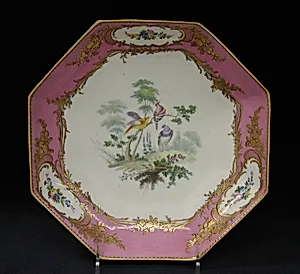
Dish
18th–19th century
Medium
Soft-paste porcelain
Dimensions
Diameter: 9 in. (22.9 cm)
Classification
Ceramics-Porcelain
Culture
European
Department
European Sculpture and Decorative Arts
Museum
Metropolitan Museum of Art, New York, NY
Credit
Gift of Henry G. Marquand, 1894
Accession Number
94.4.26a
Rights
Public Domain
Tags
Art Historical Context
This elegant dish from the Sèvresufactory, a pinnacle of 18th–19th-century European porcelain production, exemplifies the luxury craftsmanship of royal France. Founded in 1756 under Louis XV, Sèvres became the premier porcelain works, rivaling Chinese imports with its innovative soft-paste porcelain—a delicate blend of white clay, glass frit, and other materials fired at lower temperatures than true hard-paste. Measuring 9 inches in diameter, this piece was likely used for serving confections or as a decorative centerpiece, reflecting the opulence of aristocratic dining. Adorned with motifs of birds amid trees, the dish showcases Sèvres' mastery of naturalistic painting and gilding techniques. Artisans hand-painted intricate scenes in vibrant enamels, often inspired by nature studies, evoking the Rococo delight in whimsy or later Neoclassical harmony. Soft-paste allowed for finer details and translucency, making it prized for its jewel-like quality despite its fragility. A generous gift to The Metropolitan Museum of Art from Henry G. Marquand in 1894, this dish highlights Sèvres' enduring cultural prestige, symbolizing Enlightenment-era innovation and the global allure of French decorative arts. Visitors will appreciate its timeless blend of utility and artistry.
About the Artist
Sèvres Manufactory · 1740–present
The Sèvres Manufactory, one of Europe's premier porcelain producers, was established in 1740 as the Manufacture de Vincennes under the patronage of Queen Marie Leszczyńska, who sought to rival Meissen and Chantilly porcelains with French soft-paste innovations. Initially a private venture, it relocated to Sèvres in 1756 in a purpose-built facility designed by architect Laurent Lindet near Madame d...