
Dish (compotier carré)
late 18th century
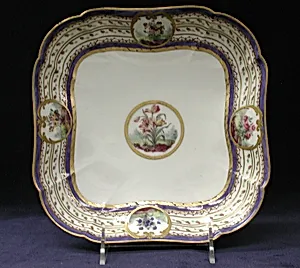
Medium
Soft-paste porcelain
Dimensions
Width: 9 3/4 in. (24.8 cm)
Classification
Ceramics-Porcelain
Culture
French, Sèvres
Department
European Sculpture and Decorative Arts
Museum
Metropolitan Museum of Art, New York, NY
Credit
Gift of Henry G. Marquand, 1894
Accession Number
94.4.135
Rights
Public Domain
Tags
Art Historical Context
Nestled in the European Sculpture and Decorative Arts at the Metropolitan Museum of, this *Dish (compotier)* from the Sèvres Manactory exemplifies the pinnacle of late 18th-century French porcelain artistry. Produced around the 1770s–1790s at the royal factory in Sèvres, near Versailles, this square compotier—measuring 9¾ inches wide—was designed for serving fruits or confections in aristocratic dining settings. Crafted from soft-paste porcelain, delicate formula blending clay, glass frit, and white ash, it offered a creamy translucency prized for mimicking Chinese hard-paste wares while allowing vibrant painted decorations, like the floral motifs hinted at in its tags. Sèvres porcelain represented France's response to East Asian imports, achieving technical mastery under royal patronage from Louis XV and XVI. Artisans employed intricate techniques such as wheel-throwing for the squared form, meticulous gilding for edges, and overglaze enameling for colorful flower designs that captured the elegance of the transitioning rococo-to-neoclassical style. This gift to the Met from Henry G. Marquand in 1894 highlights its enduring prestige. As a cultural treasure, the dish embodies the opulence of pre-Revolutionary France, where porcelain was a status symbol for the elite. Its floral embellishments evoke the era's fascination with nature's bounty, inviting visitors to appreciate the fusion of utility and superfine craftsmanship that made Sèvres synonymous with luxury worldwide.
About the Artist
Sèvres Manufactory · 1740–present
The Sèvres Manufactory, one of Europe's premier porcelain producers, was established in 1740 as the Manufacture de Vincennes under the patronage of Queen Marie Leszczyńska, who sought to rival Meissen and Chantilly porcelains with French soft-paste innovations. Initially a private venture, it relocated to Sèvres in 1756 in a purpose-built facility designed by architect Laurent Lindet near Madame d...