
Dish
Unknown Artist
18th century
Medium
Chalcedony-agate
Dimensions
H. 1 1/4 in. (3.2 cm); W. 3 1/8 in. (7.9 cm)
Classification
Hardstone
Culture
China
Department
Asian Art
Museum
Metropolitan Museum of Art, New York, NY
Credit
Gift of Heber R. Bishop, 1902
Accession Number
02.18.893
Rights
Public Domain
Art Historical Context
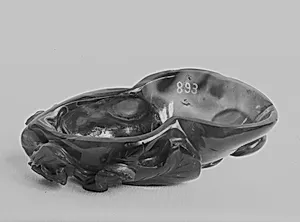
This exquisite 18th-century dish from China, carved from chalcedony-agate, the masterful hardstone craftsmanship of the Qing dynasty. just 1¼ inches high and 3⅛ inches wide, its petite scale belies the precision required to shape this semi-precious stone, prized for its luminous translucency and subtle veining that mimics natural landscapes or watery depths. Displayed in the Metropolitan Museum of Art's Asian Art Department, it entered the collection as a gift from Heber R. Bishop in 1902, a renowned collector of such rarities. In imperial China, hardstone carving reached new heights during the 18th century, particularly under the Qianlong emperor, who patronized workshops producing luxurious objects for scholars, officials, and the court. Chalcedony-agate, a variety of quartz, was especially valued for its durability and aesthetic appeal, often transformed into vessels, seals, or ornaments symbolizing refinement and harmony with nature. Though the artist remains unknown, the dish's smooth contours and polished surface highlight techniques like abrasion and polishing with abrasives, demanding immense skill and patience. For visitors, this unassuming treasure invites closer inspection—its subtle glow under light reveals the stone's hidden beauty, a testament to China's enduring tradition of turning humble materials into poetic art.