
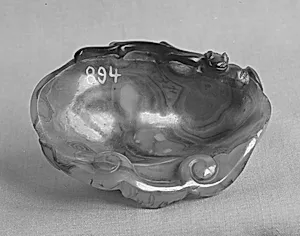
Dish
Unknown Artist
18th century
Medium
Chalcedony-agate
Dimensions
H. 1 in. (2.5 cm); W. 2 3/8 in. (6 cm)
Classification
Hardstone
Culture
China
Department
Asian Art
Museum
Metropolitan Museum of Art, New York, NY
Credit
Gift of Heber R. Bishop, 1902
Accession Number
02.18.894
Rights
Public Domain
Art Historical Context
This delicate 18th-century Chinese, carved from chalcedony-agate—a, banded variety of quartz—measures a modest 1 inch (2.5 cm) in height and 2 3/8 inches (6 cm) in width. Now part of the Metropolitan Museum of Art's Asian Art collection, it was generously gifted by Heber R. Bishop in 2. Its petite scale and smooth, lustrous surface highlight the precision of traditional hardstone carving, a technique prized in Qing dynasty China for transforming resilient stone into elegant, functional objects. Chalcedony-agate's natural veining and subtle colors made it a favorite medium among imperial workshops, where skilled lapidaries used specialized tools to polish and shape the material without cracking its tough structure. Such dishes were luxury items, often created for the scholarly elite or courtly use, embodying Confucian ideals of refinement and harmony with nature. Though the artist remains unknown, this piece reflects the height of Chinese hardstone artistry during the 18th century, a period of prosperous craftsmanship under the Qing emperors. Visitors can appreciate how its understated beauty captures the era's reverence for natural materials, inviting quiet contemplation in a bustling world.