
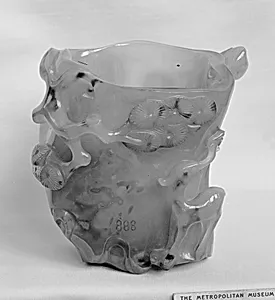
Vase
Unknown Artist
18th century
Medium
Chalcedony-agate
Dimensions
H. 4 1/2 in. (11.4 cm)
Classification
Hardstone
Culture
China
Department
Asian Art
Museum
Metropolitan Museum of Art, New York, NY
Credit
Gift of Heber R. Bishop, 1902
Accession Number
02.18.888
Rights
Public Domain
Art Historical Context
This exquisite 18th-century Chinese vase, carved from chalcedony-agate, the masterful hardstone craftsmanship of the Qing dynasty. just 4½ inches (11.4 cm) tall, its petite scale belies the monumental skill required to shape this resilient, semi-precious stone, known for its translucent bands of color and durability. Chalcedony-agate was highly prized in imperial China for its natural beauty, often transformed into vessels that highlighted the lapidary's precision in revealing intricate patterns without flaws. During the 18th century, under emperors like Qianlong, hardstone carving flourished as a symbol of refinement and imperial patronage. Artisans employed specialized tools to hollow and polish the stone, creating functional yet ornamental objects for scholarly elites or palace displays. This vase likely served as a decorative accent, evoking the harmony of nature prized in Chinese aesthetics. Generously gifted to the Metropolitan Museum of Art in 1902 by Heber R. Bishop, a renowned collector of hardstones, this piece invites visitors to marvel at China's enduring legacy of virtuosic stonework, bridging artistry and connoisseurship across centuries.