
Dish
Unknown Artist
late 15th–early 16th century
Medium
Tin-glazed earthenware
Dimensions
Overall: 3 x 19 1/4 in. (7.6 x 48.9 cm)
Classification
Ceramics
Culture
Spanish
Department
The Cloisters
Museum
Metropolitan Museum of Art, New York, NY
Credit
The Cloisters Collection, 1956
Accession Number
56.171.121
Rights
Public Domain
Tags
Art Historical Context
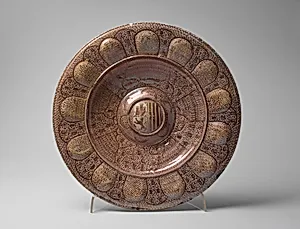
This elegant Spanish dish, crafted from tin-glazed earthenware in the late 15th to early 16th century, exemplifies the vibrant ceramic traditions of Renaissance Spain. Measuring a generous 19¼ inches in diameter yet only 3 inches high, it served as a grand charger—likely for display on a sideboard or special occasions rather than everyday use. The tin glaze, a hallmark technique introduced via Islamic influences during Spain's medieval period, created a smooth, opaque white surface ideal for bold painted designs, including the prominent coat of arms that adorns it, signaling the status of a noble family or patron. Hispano-Moresque ware like this dish blended Christian and Moorish artistry, thriving in workshops around Manises and Valencia. The metallic luster and vivid cobalt blues or greens (typical of the era) made these pieces prized exports across Europe, symbolizing wealth and cultural fusion at a time when Spain's Catholic Monarchs were consolidating power post-Reconquista. Though the artist remains unknown, such dishes were masterworks of technical skill, fired at high temperatures to achieve durability and sheen. Now part of The Cloisters Collection at The Metropolitan Museum of Art since 1956, this piece invites visitors to ponder the daily splendor of Spanish elite life, where ceramics were not just functional but canvases for heraldry and heritage.