
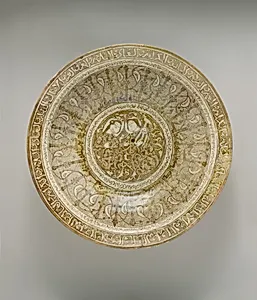
Bowl with Musicians
Unknown Artist
mid-13th century
Medium
Stonepaste; luster-painted on opaque monochrome glaze
Dimensions
H. 4 3/8 in. (11.1 cm) Diam. 19 5/8 in. (49.8 cm)
Classification
Idiophone
Department
Islamic Art
Museum
Metropolitan Museum of Art, New York, NY
Credit
Fletcher Fund, 1932
Accession Number
32.52.2
Rights
Public Domain
Tags
Art Historical Context
This exquisite *Bowl with Musicians*, crafted by an unknown artist in the-13th century, the pinnacle of Islamic ceramic artistry from the medieval Islamic world, likely Iran or Syria.ed from stonepaste—a fine, vitrified clay body—and adorned with luster-painting over an opaque monochrome glaze, the bowl achieves a shimmering, metallic glow that mimics precious metals. Standing just 4 3/8 inches tall with a generous 19 5/8-inch diameter it was designed for both practical use and aesthetic delight, perfect for serving food or drink in elite households. The vibrant scenes of musicians and human figures, accompanied by poetic inscriptions, reflect the cultural flourishing of the Abbasid and Mongol eras. Lusterware like this was a technical marvel, developed in the 9th century and perfected by the 13th, symbolizing luxury and patronage of the arts. Musicians, often depicted with idiophones like cymbals or frame drums, evoke the lively courtly entertainment and poetic traditions central to Islamic society, where music and verse celebrated life's joys. Now housed in the Metropolitan Museum of Art's Islamic Art Department (acquired via the Fletcher Fund in 1932), this bowl invites visitors to imagine the melodies and verses that once animated 13th-century gatherings, bridging art, music, and daily ritual.