
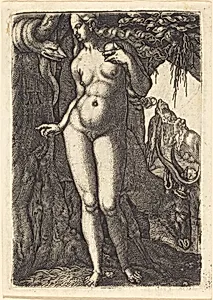
Eve
1501 to 1550
Medium
engraving
Classification
Department
CG-E
Museum
National Gallery of Art, Washington, D.C.
Credit
Rosenwald Collection
Accession Number
1947.12.1
Rights
Public Domain
Art Historical Context
Behold *Eve*, a captivating engraving by Heinrich Aldegrever, a masterful German printmaker of the Northern Renaissance active between 1501 and 1550. Part of the National Gallery of Art's esteemed Rosenwald Collection (Department CG-E), this print exemplifies Aldegrever's prowess among the "Little Masters"—engravers renowned for their intricate, small-scale works on metal plates. The medium of engraving allowed for exceptional fine lines and textures, enabling the production of detailed multiples that democratized art for a wider audience beyond the elite. Aldegrever's depiction of Eve draws from biblical tradition, portraying the first woman in the Garden of Eden with a naturalism influenced by Italian Renaissance ideals filtered through Northern precision. His style blends meticulous line work—hallmarks of German engraving—with subtle modeling of form and foliage, capturing both sensuality and symbolism. Created amid the Protestant Reformation, such nudes reflected ongoing debates on humanity, sin, and beauty in art. This piece highlights engraving's revolutionary role in 16th-century Europe: portable, affordable, and precise, it spread humanist themes far and wide. Visitors, admire how Aldegrever's Eve invites reflection on creation, temptation, and the enduring allure of the human figure in Western art. (198 words)
About the Artist
Heinrich Aldegrever · 1502–1561
Heinrich Aldegrever, born in 1502 in Paderborn, Westphalia, to parents Herman and Katherine Trippenmeker—a family of clog-makers known by the dialect name Trippenmecker—emerged as a multifaceted artist in the German Renaissance. His early training remains undocumented, though he likely apprenticed in a Soest goldsmith's workshop after relocating there around 1525, where he joined the painters' gui...