
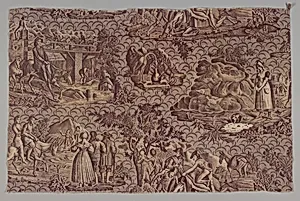
Fables of Fontaine
Medium
printed, dyed & painted textiles
Classification
printed, dyed & painted textiles
Department
Smithsonian Collection
Museum
Smithsonian American Art Museum
Credit
Bequest of Elinor Merrell
Accession Number
1995-50-156
Rights
Public Domain
About this artwork
Research in Progress
Art Historical Context
**Fables of Fontaine *Alexandre Buquet (French, 1802–1865), ca. 1830* Printed, dyed & painted textilesSmithsonian American Art Museum, Bequest of Elinor Mer Step into the whimsical world of Jean de La Fontaine's timeless fables with *Fables of Fontaine*, a captivating textile artwork by French designer Alexandre Buquet. Created 1830, during France's July Monarchy—a period of burgeoning industrialization and artistic innovation—this piece likely features vivid scenes from La Fontaine's17th-century moral tales where clever animals impart lessons on human folly. Buquet, active in the vibrant textile trade, transformed these beloved stories into decorative fabric, blending narrative charm with practical elegance for homes and interiors. The medium of printed, dyed, and painted textiles highlights a key 19th-century advancement: mechanized printing techniques that made intricate designs affordable and widespread. Hand-painted details add a luxurious, artisanal touch, elevating everyday fabrics into storytelling masterpieces. Such works were prized in bourgeois households, reflecting France's leadership in textile arts amid the Romantic era's love for nature, fantasy, and moral reflection. Housed in the Smithsonian American Art Museum through the generous bequest of Elinor Merrell, this piece bridges European design with American collecting tastes. Though research continues, *Fables of Fontaine* invites us to ponder enduring wisdom—proving that even a humble textile can weave profound cultural threads across centuries.