
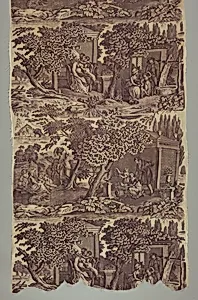
Textile
ca. 1800
Classification
printed, dyed & painted textiles
Department
Smithsonian Collection
Museum
Smithsonian American Art Museum
Credit
Bequest of Elinor Merrell
Accession Number
1995-50-124
Rights
Public Domain
About this artwork
Research in Progress
Art Historical Context
This enigmatic *Textile* from around 1800 offers a glimpse into early American craftsmanship, housed in the Smithsonian American Art Museum's collection. Classified as a printed, dyed and painted textile, it the labor-intensive techniques used to create vibrant fabrics during the Federal period, just after the nation's founding. Donated through the bequest of Elinor Merrell, piece reflects the everyday artistry of anonymous makers who transformed plain cloth into decorative or functional objects like quilts, curtains, or garments. In the early 19th century, American textiles were cultural touchstones, blending European influences with emerging domestic industries. Printing involved block or resist methods to apply patterns, while dyeing with natural pigments like indigo or madder added rich colors, and painting allowed for custom embellishments. These processes were often women's work, preserving family stories or regional motifs amid rapid social change. Research into this textile is ongoing, inviting us to ponder its untold stories—perhaps a sampler of fashion, home life, or trade goods. Its presence in the Smithsonian underscores the value of such humble artifacts in tracing America's material history. (178 words)
About the Artist
Unknown
The artist designated as "Unknown" in our virtual museum's collection exemplifies a poignant chapter in art history: creators whose identities have faded into obscurity despite the enduring power of their work. With only one known artwork attributed to them in our holdings, this figure represents countless anonymous hands that shaped visual culture across centuries. Museums worldwide, including th...