
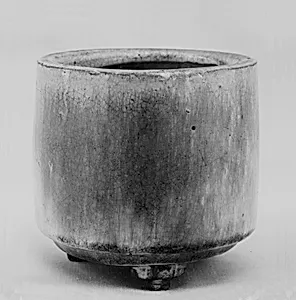
Fire Bowl
Unknown Artist
19th century
Medium
Clay covered with a transparent glaze, streaked with white (Kiyomizu ware)
Dimensions
H. 4 1/8 in. (10.5 cm); Diam. 4 1/2 in. (11.4 cm)
Classification
Ceramics
Culture & Period
Japan · Edo (1615–1868) or Meiji period (1868–1912)
Department
Asian Art
Museum
Metropolitan Museum of Art, New York, NY
Credit
Gift of Mr. and Mrs. Samuel Colman, 1893
Accession Number
93.1.197
Rights
Public Domain
Art Historical Context
This exquisite *Fire Bowl*, crafted by an unknown artist in 19th-century Japan, the refined artistry of Kiyomizu ware from Kyoto's Kiyomizu district. Fashioned from clay and coated with a transparent glaze delicately streaked with white, bowl measures just 4 1/8 inches high and 1/2 inches in diameter—perfectly sized for intimate, practical use. Dating to the late Edo period (16151868) or early Meiji era (1868–1912), it captures a pivotal moment when Japan transitioned from isolation to global engagement, with ceramics like this becoming prized exports. Kiyomizu ware is renowned for its innovative glazing techniques, where the transparent overglaze allows subtle streaks and hues to shimmer, creating a sense of movement and depth. This piece highlights the anonymous mastery of Japanese potters, who elevated everyday objects into aesthetic treasures through precise firing and natural material variations. Likely used to hold glowing embers for warmth or incense, it embodies the wabi-sabi appreciation for imperfection and transience in Japanese culture. A generous gift to the Metropolitan Museum of Art from Mr. and Mrs. Samuel Colman in 1893, this bowl invites visitors to ponder the blend of utility and beauty in Edo-Meiji ceramics, bridging Japan's artisanal past with its modern legacy.