
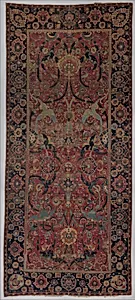
Floral Arabesque Carpet
Unknown Artist
17th century
Medium
Cotton (warp and weft), wool (pile); asymmetrically knotted pile
Dimensions
Rug: L. 189 in. (480.1 cm) W. 82 1/2 in. (209.6 cm) Wt. 41lbs. (18.6 kg) with 6" tube Bottom: H. 187 in. (475 cm) W. 80 3/4 in. (205.1 cm)
Classification
Textiles-Rugs
Department
Islamic Art
Museum
Metropolitan Museum of Art, New York, NY
Credit
Rogers Fund, 1969
Accession Number
69.244
Rights
Public Domain
Art Historical Context
Step into the opulent world of 17th-century Islamic art the *Floral Arabesque Carpet a masterful textile that exemplifies the exquisite craftsmanship of the era. Woven with cotton warp and weft and a lush wool pile using the asymmetrically knotted technique—characteristic of Persian rug-making—this rug features intricate, repeating floral arabesque patterns. These swirling motifs of vines, blossoms, and tendrils evoke the paradisiacal gardens celebrated in Islamic culture, symbolizing eternity and divine beauty without relying on human or animal figures, in keeping with aniconic traditions. Measuring an impressive 15 feet 9 inches long by 6 feet 10 inches wide and weighing a substantial 41 pounds (rolled with its tube), this carpet was likely designed for a grand architectural space, such as a mosque, palace, or wealthy home. The asymmetrical knotting allowed weavers to create finely detailed designs with remarkable density, showcasing technical virtuosity that could take months or years to complete. Acquired through the Rogers Fund in 1969, it now graces the Metropolitan Museum of Art's Islamic Art department. This rug not only warms floors but transports us to a time when textiles were among the highest expressions of artistic patronage, blending utility with profound aesthetic and spiritual resonance. A true treasure for any visitor!