
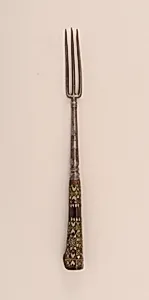
Fork from a Cutlery Set
ca. 1630
Classification
cutlery
Department
Smithsonian Collection
Museum
Smithsonian American Art Museum
Credit
The Robert L. Metzenberg Collection, gift of Eleanor L. Metzenberg
Accession Number
1985-103-35
Rights
Public Domain
About this artwork
Research in Progress
Art Historical Context
This elegant fork, part of a cutlery set dating to around 1630, offers a glimpse into early th-century dining culture. Produced during a time forks were still a relative—having originated in Renaissance and slowly spreading across Europe—they represented luxury and refinement. In the American colonies, such items rare treasures, often imported or crafted skilled artisans for affluent households, marking a shift from communal trenchers and knives toward more individualized table manners. As a piece of functional silver or metalwork (medium under study), this fork exemplifies the blend of utility and subtle artistry in everyday objects. Its presence in the Smithsonian American Art Museum highlights the evolution of American material culture, where cutlery like this bridged Old World traditions with New World practicality. Housed in The Robert L. Metzenberg Collection and gifted by Eleanor L. Metzenberg, the fork awaits further research, promising new insights into colonial craftsmanship and social history. Visitors, imagine wielding this at a 1630s feast— a small but sophisticated statement of status!
About the Artist
Unknown
The artist designated as "Unknown" in our virtual museum's collection exemplifies a poignant chapter in art history: creators whose identities have faded into obscurity despite the enduring power of their work. With only one known artwork attributed to them in our holdings, this figure represents countless anonymous hands that shaped visual culture across centuries. Museums worldwide, including th...