
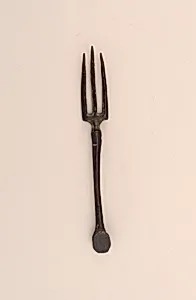
Fork
late 17th century
Classification
cutlery
Department
Smithsonian Collection
Museum
Smithsonian American Art Museum
Credit
The Robert L. Metzenberg Collection, gift of Eleanor L. Metzenberg
Accession Number
1985-103-30
Rights
Public Domain
About this artwork
Research in Progress
Art Historical Context
This elegant fork from the late 17th century offers a glimpse into everyday life during America's colonial era. Housed in the Smithsonian American Art Museum as part of the Robert L. Metzenberg Collection—generously gifted by Eleanor L. Metzenberg—it exemplifies the practical yet refined cutlery of the time. While details on its maker and materials remain under research, its presence in the museum highlights how ordinary objects can embody historical artistry and craftsmanship. In the late 1600s, forks were still a novelty in the American colonies, transitioning from European aristocratic tables to broader use. Imported or locally crafted, they symbolized emerging standards of dining etiquette and social sophistication, often featuring simple, functional designs that prioritized durability for pioneer households. This piece reflects that pivotal shift, bridging utility and subtle aesthetic appeal in early American material culture. As research continues, this fork invites us to ponder the unsung heroes of history: the tools that shaped daily rituals. Visitors are encouraged to appreciate its quiet story amid the museum's treasures, reminding us that even the smallest artifacts hold layers of cultural significance.
About the Artist
Unknown
The artist designated as "Unknown" in our virtual museum's collection exemplifies a poignant chapter in art history: creators whose identities have faded into obscurity despite the enduring power of their work. With only one known artwork attributed to them in our holdings, this figure represents countless anonymous hands that shaped visual culture across centuries. Museums worldwide, including th...