
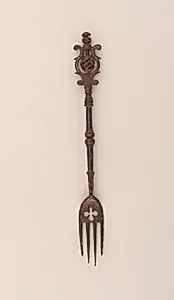
Fork
ca. 1550
Medium
cutlery
Classification
cutlery
Department
Smithsonian Collection
Museum
Smithsonian American Art Museum
Credit
The Robert L. Metzenberg Collection, gift of Eleanor L. Metzenberg
Accession Number
1985-103-32
Rights
Public Domain
About this artwork
Research in Progress
Art Historical Context
Step into the elegant world of 16th-century dining with this rare *Fork*, dating to around 1550. Housed in the Smithsonian American Museum as part of the Smithsonian Collection this piece from The Robert L. Metzen Collection—generously gifted by Eleanor L. Metberg—represents the dawn of sophisticated tableware. As a simple yet revolutionary cutlery item, it highlights the transition from communal trenchers and fingers to personal utensils, marking a shift in everyday etiquette. In Renaissance Europe, forks were a novelty, trickling in from Byzantine and Italian influences where they symbolized refinement and hygiene. By the mid-1500s, they were gaining traction among the elite, challenging the medieval norm of knife-and-hand use. This fork, though its maker remains unknown, embodies that cultural pivot—less a mere tool, more a status symbol in the decorative arts. Today, amid ongoing research, it invites us to ponder the artistry in functionality. Crafted for the table, it whispers of opulent banquets and evolving manners, a tangible link to how our ancestors savored life's pleasures. (178 words)
About the Artist
Unknown
The artist designated as "Unknown" in our virtual museum's collection exemplifies a poignant chapter in art history: creators whose identities have faded into obscurity despite the enduring power of their work. With only one known artwork attributed to them in our holdings, this figure represents countless anonymous hands that shaped visual culture across centuries. Museums worldwide, including th...