
Fragment
Unknown Artist
ca. 1200
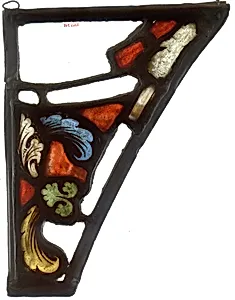
Medium
Pot-metal glass, vitreous paint, lead
Dimensions
Overall: 7 7/16 x 5 7/8 x 3/16 in. (18.9 x 15 x 0.5 cm)
Classification
Glass-Stained
Culture
French
Department
Medieval Art
Museum
Metropolitan Museum of Art, New York, NY
Credit
Gift of Ella Brummer, in memory of her husband, Ernest Brummer, 1977
Accession Number
1977.346.3
Rights
Public Domain
Art Historical Context
This delicate stained glass fragment, dating to around 1200 and originating from France, offers a glimpse into the luminous world of medieval church decoration. Created during the early Gothic period, when grand cathedrals like Notre-Dame and Chartres were rising, such panels transformed sacred spaces into vibrant storytelling mediums. Though the exact scene it depicted—likely biblical or saintly—is lost, its survival speaks to the era's architectural ambition and devotion. Crafted from pot-metal glass, where metallic oxides were fused into the molten silica for deep, jewel-like colors, the fragment was detailed with vitreous paint fired onto the surface for fine lines and shading. Slender lead strips held the pieces together, ensuring both structural integrity and a mosaic effect that danced with candlelight and sunlight. This technique, perfected in 12th-century France, made stained glass a pinnacle of medieval artistry, rivaling sculpture in its expressive power. Today, preserved at The Metropolitan Museum of Art through a 1977 gift from Ella Brummer in memory of her husband, Ernest, this modest 7 7/16 x 5 7/8-inch piece invites us to ponder the fragility of history. Imagine it once glowing amid towering rose windows, illuminating worshippers below—a testament to faith, craft, and the enduring allure of light through color.