
Fragment
1650/1700
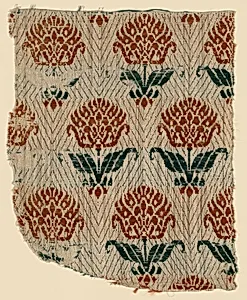
Medium
Linen and wool, plain weave with supplementary weft
Classification
textile
Department
Textiles
Museum
Art Institute of Chicago
Accession Number
62396
Rights
Public Domain
Art Historical Context
Nestled in the Textiles department of the Art Institute of Chicago, this untitled *Fragment* from around 1650–1700 offers a tantalizing glimpse into 17th-century weaving artistry. Crafted from linen and wool using a plain weave foundation enhanced by supplementary weft, it exemplifies the skilled labor of anonymous textile makers during the Baroque era. The plain weave—created by interlacing warp and weft threads at right angles—provided a sturdy, versatile base, while the supplementary weft added decorative floats or patterns, allowing for intricate designs without compromising durability. In an age when textiles were both everyday essentials and symbols of status, such fragments often survived from garments, furnishings, or ecclesiastical vestments. This piece highlights the era's advancements in loom technology and dye processes, where wool offered warmth and linen breathability, blending functionality with subtle elegance. Though its full story remains elusive due to its fragmentary state, it invites us to ponder the hands that wove it—likely in a European workshop amid the flourishing trade of fibers across continents. Today, as part of the museum's vast textile collection, it underscores the enduring cultural value of these "humble" arts, preserving whispers of history in every thread. (198 words)
About the Artist
Unknown
The artist designated as "Unknown" in our virtual museum's collection exemplifies a poignant chapter in art history: creators whose identities have faded into obscurity despite the enduring power of their work. With only one known artwork attributed to them in our holdings, this figure represents countless anonymous hands that shaped visual culture across centuries. Museums worldwide, including th...