
Gilt ripple frame
Unknown Artist
late 17th century
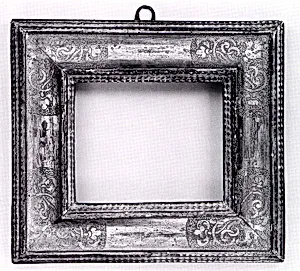
Medium
Poplar. Gilt; orange-red bole. Iron hanger.
Dimensions
Overall: 10 13/16 × 12 3/8 in. (27.5 × 31.5 cm) Sight: 5 1/4 × 6 9/16 in. (13.4 × 16.7 cm) Rabbet: 5 11/16 × 7 1/2 in. (14.5 × 19 cm)
Classification
Frames
Culture
Sicilian(?)
Department
Robert Lehman Collection
Museum
Metropolitan Museum of Art, New York, NY
Credit
Robert Lehman Collection, 1975
Accession Number
1975.1.2326
Rights
Public Domain
Art Historical Context
This exquisite gilt ripple frame, dating to the late 17 century and possibly of Sicilian origin, exemplifies the opulent Baroque taste for decorative splendor. Crafted from poplar wood—a lightweight, workable choice favored for such intricate designs—the frame features a distinctive "ripple" profile, with undulating waves along its edges that catch and reflect light dramatically. Its modest overall dimensions (10 13/16 × 12 3/8 inches belie its grandeur, designed to elegantly encase a small painting or portrait, as indicated by the sight size of 5 1/4 × 6 9/16 inches. The frame's surface is masterfully gilded over an orange-red bole, a clay adhesive that provides a warm, glowing underlayer beneath the gold leaf, enhancing its luster and simulating costly solid gold. An iron hanger adds a practical touch, suggesting it was intended for domestic display. Ripple frames emerged in Italy mid-century and spread across Europe, symbolizing wealth and artistic refinement during an era when frames were as vital to a painting's impact as the canvas itself. Housed in the Robert Lehman Collection at The Metropolitan Museum of Art since 1975, this anonymous Sicilian(?) gem offers a window into 17th-century frame-making artistry, where craftsmanship elevated everyday objects into treasures. Visitors will appreciate its subtle shimmer—a testament to enduring Baroque elegance.