
Haiku
Medium
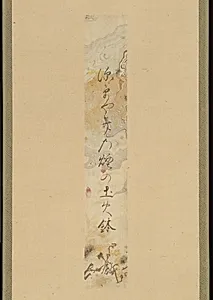
Hanging scroll; ink on paper, decorated in gold and silver
Dimensions
Image: 14 × 2 3/16 in. (35.5 × 5.6 cm)
Classification
Calligraphy
Culture & Period
Japan · Edo period (1615–1868)
Department
Asian Art
Museum
Metropolitan Museum of Art, New York, NY
Credit
Gift of Florence and Herbert Irving, 2015
Accession Number
2015.500.9.64
Rights
Public Domain
Art Historical Context
This delicate hanging scroll, titled *Haiku*, exemplifies the refined elegance of Japanese calligraphy during the Edo period (1615–1868). Created by artist Iwakura Tomonori, the work features ink brushed onto paper and accented with gold and silver decorations. Its modest dimensions—roughly the size of a narrow bookmark—invite close, personal viewing, a hallmark of intimate Edo-era literary arts. As a piece classified as calligraphy, it likely presents a haiku poem, capturing the era’s growing appreciation for concise poetic expression that blended nature, emotion, and seasonal imagery. In the Edo period, calligraphy and poetry often merged in hanging scrolls designed for tokonoma alcoves, where they served as focal points for quiet contemplation. The addition of gold and silver not only enhances visual harmony but also reflects the period’s sophisticated decorative techniques, elevating the written word to an object of aesthetic delight. Such works highlight Japan’s deep cultural reverence for the interplay between language and visual form. Today, this scroll resides in the Metropolitan Museum of Art’s Asian Art collection, gifted by Florence and Herbert Irving in 2015. It offers visitors a glimpse into the understated beauty and literary grace that defined Edo-period artistic life.