
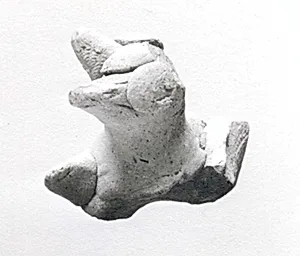
Handle
Unknown Artist
ca. 3rd–7th century CE
Medium
Ceramic
Dimensions
1 7/16 x 11/16 x 1 1/4 in. (3.7 x 1.7 x 3.2 cm)
Classification
Ceramics-Implements
Culture & Period
Sasanian · Sasanian
Department
Ancient Near Eastern Art
Museum
Metropolitan Museum of Art, New York, NY
Credit
Rogers Fund, 1932
Accession Number
32.150.415
Rights
Public Domain
Art Historical Context
This delicate ceramic handle, dating to the Sasanian (ca. 3rd–7th century), offers a glimpse into the everyday artistry of ancient Iran. Crafted by an unknown artisan, it measures just 1 7/16 x 11/16 x 1 1/4 inches, suggesting it adorned a small vessel, perhaps a jug or ritual implement. Acquired through the Rogers Fund in 1932, it now resides in the Metropolitan Museum of Art's Department of Ancient Near Eastern Art classified among ceramics-implements that highlight functional beauty. The Sasanian Empire (224–651 CE) marked a pinnacle of Persian cultural revival, blending influences from Achaemenid, Parthian, and Greco-Roman traditions. Ceramics like this handle were typically wheel-thrown or molded from local clays, fired to a sturdy finish that balanced utility with subtle elegance. Though undecorated in surviving form, such objects reveal sophisticated potter's techniques, essential for household wares amid a Zoroastrian society thriving on trade along the Silk Road. Its modest scale underscores the Sasanians' mastery of miniaturization, turning commonplace tools into durable heirlooms. For visitors, this handle evokes the tactile world of ancient life—imagine it gripped during a shared meal or ceremony—bridging us to a vibrant era before the rise of Islam transformed the region.