
Het nog niet geopende rood
1823
Medium
nishikie, with metallic pigments and tsuyazuri
Dimensions
208; 182
Rights
Public Domain
About this artwork
blad: hoogte 208 mm (shikishiban) x breedte 182 mm
Art Historical Context
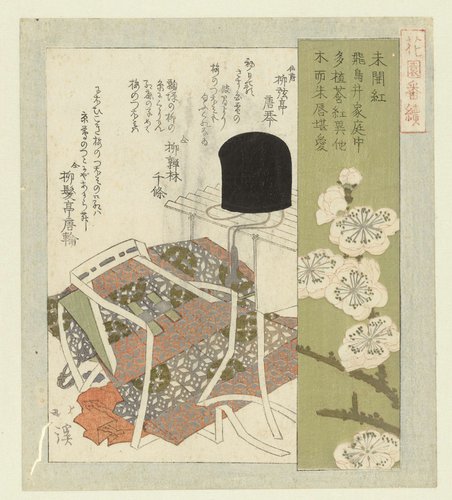
**Het nog niet geopende** by Totoya Hokkei, created in 1823, exemplifies the vibrant world of Edo-period ukiyo-e from Japan. Hokkei, skilled pupil of the master Katsushika Hokusai, was renowned for his delicate landscapes, figures, and innovative compositions. This small-scale work, sized at 208 mm high by 182 mm wide in the intimate shikishiban formattypically used for poetic album leaves or greeting cards—captures a moment of anticipation, its title evoking "the still unopened red," perhaps alluding to a budding flower or hidden beauty in nature. Printed as a *nishikie* (brocade picture), it showcases the pinnacle of woodblock printing artistry with its multicolored layers. Hokkei enhanced the piece with metallic pigments for luminous accents and *tsuyazuri*, a technique applying mica powder to mimic dew-kissed gloss or shimmering silk, adding tactile depth to the flat page. These luxurious effects elevated humble prints into treasures, bridging everyday aesthetics with elite refinement. In 19th-century Japan, such works democratized art, adorning homes and conveying seasonal poetry or wit. Today, Hokkei's subtle mastery invites us to savor the poetry of the unopened, a fleeting Edo elegance preserved in pigment and gleam.
About the Artist
Totoya Hokkei · 1780–1850
Totoya Hokkei (魚屋 北渓, 1780–1850), born Iwakubo Tatsuyuki in Edo (modern Tokyo), began his life as a humble fishmonger in the Yotsuya Samegahashi district, a trade reflected in his art name "Totoya," meaning fish shop. He transitioned to art through rigorous training, first studying under Kanō Yōsen'in Korenobu, head of the Kobikichō branch of the prestigious Kanō school, where he honed landscape p...