
Saigyô ume
1823
Medium
nishikie, with metallic pigments, blindprinting and surface polishing
Dimensions
203; 179
Rights
Public Domain
About this artwork
height 203 mm x width 179 mm
Art Historical Context
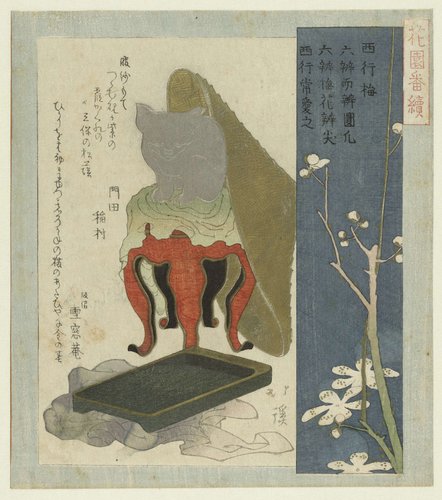
**Saigyô ume** (Saigyô and Plum Blossoms), by Totoya Hokkei 1823, is a delicate ukiyo-e print from Edo period. Hokkei, a master of surimono—luxurious, custom-printed artworks often commissioned for poetry gatherings or New Year's celebrations—captures the revered 12th-century poet-monk Saigyô amid blooming plum branches. Saigyô, famous for his wandering life and waka poems evoking nature's fleeting beauty, embodies the Japanese aesthetic of *mono no aware*, or the pathos of things, making this image a poetic tribute to transience and serenity. Printed in the vibrant *nishikie* (brocade picture) style, this compact work (203 × 179 mm) showcases Hokkei's technical prowess. Metallic pigments lend a shimmering glow to the blossoms, evoking dew-kissed petals, while blindprinting creates subtle embossed textures for depth without ink, and surface polishing imparts a silky luster. These innovations elevated surimono beyond mass-produced prints, turning them into collector's treasures that rival paintings in refinement. In Edo-era culture, such prints bridged art and literature, fostering *renga* poetry circles. *Saigyô ume* reflects this elegance, inviting viewers to ponder the monk's timeless harmony with nature—a perfect gem for any virtual gallery stroll.
About the Artist
Totoya Hokkei · 1780–1850
Totoya Hokkei (魚屋 北渓, 1780–1850), born Iwakubo Tatsuyuki in Edo (modern Tokyo), began his life as a humble fishmonger in the Yotsuya Samegahashi district, a trade reflected in his art name "Totoya," meaning fish shop. He transitioned to art through rigorous training, first studying under Kanō Yōsen'in Korenobu, head of the Kobikichō branch of the prestigious Kanō school, where he honed landscape p...