
History of Kamakura
19th century
Medium
Woodblock print (surimono); ink and color on paper
Dimensions
8 1/4 x 7 1/8 in. (21 x 18.1 cm)
Classification
Prints
Culture & Period
Japan · Edo period (1615–1868)
Department
Asian Art
Museum
Metropolitan Museum of Art, New York, NY
Credit
H. O. Havemeyer Collection, Bequest of Mrs. H. O. Havemeyer, 1929
Accession Number
JP2030
Rights
Public Domain
Tags
Art Historical Context
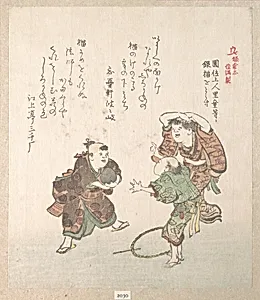
Kubo Shunman's *History of Kamakura* a delightful example of a *surimono*, a luxurious type of Japanese woodblock print produced during the Edo period (1615–8). Created in the early 19th century this intimate work measures just 8¼ x 7⅛ inches, using vibrant ink and color on paper Shunman, a versatile ukiyo-e artist for his poetic and refined designs, crafted *surimono* like this one for private patrons, often as New Year's greetings or commissions featuring kyōka poems. These prints stand out for their exquisite craftsmanship, including subtle embossing, metallic pigments, and precise carving that brought scenes to life with remarkable detail. The title evokes Kamakura, the 12th–14th-century seat of Japan's first shogunate under Minamoto no Yoritomo, a pivotal era of samurai culture and Zen Buddhism symbolized by its iconic Great Buddha and warrior temples. Here, tagged with "boys," the print likely captures youthful figures amid this storied history, blending education with whimsy in the playful ukiyo-e tradition of "pictures of the floating world." Such works educated viewers on Japan's past while celebrating ephemeral beauty. From the H.O. Havemeyer Collection at The Metropolitan Museum of Art, this gem highlights the sophistication of Edo-era printmaking, inviting us to ponder how art preserved cultural memory for everyday delight.
About the Artist
Kubo Shunman · 1757–1820
Japanese, 1757–1820