
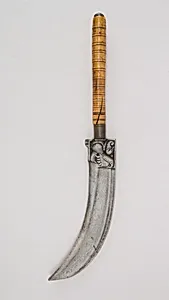
Knife (<i>Matchu</i>)
Unknown Artist
18th–19th century
Medium
Steel, ivory, brass
Dimensions
H. 17 1/4 in. (43.8 cm); H. of blade 9 3/4 in. (24.8 cm); W. 2 in. (5.1 cm); Wt. 1 lb. 3 oz. (538.6 g)
Classification
Shafted Weapons
Culture
South Indian
Department
Arms and Armor
Museum
Metropolitan Museum of Art, New York, NY
Credit
Bequest of George C. Stone, 1935
Accession Number
36.25.1280
Rights
Public Domain
Art Historical Context
This striking South Indian *Knife (Matchu)*, dating to the 18th–19th century, exemplifies the region's masterful arms craftsmanship. Measuring 17¼ inches in height with a 9¾-inch steel blade, this shafted weapon combines durability and elegance through its steel blade, ivory grip, and brass accents. Weighing a substantial 1 lb. 3 oz., it was designed for both practical combat and ceremonial display, reflecting the technical prowess of South Indian smiths renowned for high-carbon wootz steel, which produced blades with exceptional strength and distinctive watery patterns. In the turbulent era of South Indian history—marked by rival kingdoms like Mysore and Travancore, and escalating European colonial pressures—such weapons were vital for warriors, including those practicing martial arts like kalaripayattu. The *matchu*, a type of thrusting knife on a wooden shaft (now likely restored), symbolized martial prowess and social status, often carried by nobility or temple guards. Ivory and brass embellishments elevated it beyond mere utility, blending functionality with artistry. Acquired through the 1935 bequest of collector George C. Stone and housed in The Metropolitan Museum of Art's Arms and Armor Department, this piece offers a window into South Asia's rich martial heritage, where weapons doubled as cultural icons. Visitors will appreciate its balance of lethal form and sculptural beauty.