
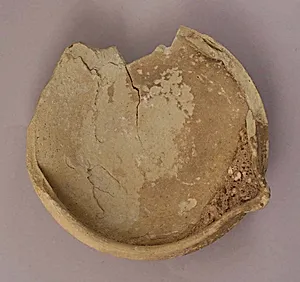
Lamp
Unknown Artist
9th century
Medium
Earthenware; unglazed
Dimensions
H. 1 1/8 in. (2.8 cm) W. 3 3/4 in. (9.5 cm) D. 3 13/16 in. (9.7 cm)
Classification
Ceramics
Department
Islamic Art
Museum
Metropolitan Museum of Art, New York, NY
Credit
Gift of Noel E. Baker, 1952
Accession Number
52.130.16
Rights
Public Domain
Art Historical Context
This delicate earthenware lamp, crafted by an unknown artist in the9th century, offers a glimpse into the everyday life of the Islamic world during the Abbas era. Standing just 1 1/8 tall and measuring about 3 3/4 inches wide, its compact, unglazed form suggests it designed for practical use as an oil lamp, likely with vegetable oil and a wick for illuminating homes, mosques, or markets. Housed in the Metropolitan Museum of Art's Islamic Department, it entered the collection as a gift from Noel E. Baker in 1952. Unglazed earthenware was a hallmark of early Islamic ceramics, prized for its affordability and durability in regions abundant with clay. Fired at relatively low temperatures, these vessels were hand-formed or mold-made, reflecting artisanal techniques that prioritized function over ornamentation. Though simple, such lamps underscore the cultural emphasis on light as a metaphor for knowledge and divine guidance in Islamic tradition, bridging the mundane and the spiritual. Today, this unassuming artifact reminds us that Islamic art thrived not only in grand palaces but in humble hearths, illuminating the ingenuity of 9th-century artisans whose work powered daily rhythms across a vast caliphate.