
Large Dish
Unknown Artist
1800
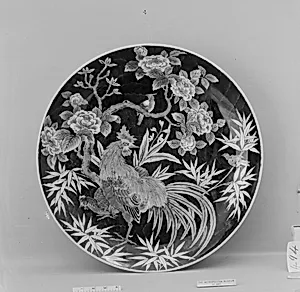
Medium
White porcelain decorated with blue under the glaze and green enamel (Arita ware)
Dimensions
H. 3 1/2 in. (8.9 cm); Diam. 21 3/4 in. (55.2 cm)
Classification
Ceramics
Culture & Period
Japan · Edo period (1615–1868)
Department
Asian Art
Museum
Metropolitan Museum of Art, New York, NY
Credit
Gift of Charles Stewart Smith, 1893
Accession Number
93.3.494
Rights
Public Domain
Tags
Art Historical Context
This magnificent *Large Dish* from Japan's Edo period (circa 0) showcases the pinnacle of Arita ware porcelain production. Crafted from fine white porcelain it spans an impressive 21¾ inches (55.2 cm) in diameterperfect for serving or display—while standing just 3½ inches (8.9 cm) tall. Delicate motifs of birds, roosters, flowers bloom across its surface in brilliant blue under the glaze, accented by lush green enamel, capturing nature's vibrancy with timeless elegance. Arita kilns in Saga Prefecture revolutionized Japanese ceramics during the 17th–19th centuries, mastering high-fired porcelain that rivaled Chinese imports and fueled lucrative export trade to Europe. The underglaze blue technique, where cobalt pigment is applied before glazing and fired at intense temperatures, embeds color deeply into the clay for enduring brilliance. Overglaze green enamel, added and fired at lower heat, provides vivid highlights, demonstrating the era's technical sophistication. In Edo Japan, such dishes graced tea ceremonies or elite tables, with roosters symbolizing vigilance and prosperity, and flowers evoking seasonal beauty. Donated to The Metropolitan Museum of Art in 1893 by Charles Stewart Smith, this piece bridges East and West, highlighting porcelain's role in global cultural exchange.