
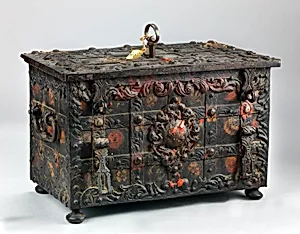
Lock Box
Medium
Decorative Arts
Classification
Decorative Arts
Department
Smithsonian Collection
Museum
Smithsonian American Art Museum
Credit
Smithsonian American Art Museum, Given in memory of Eliphalet Fraser Andrews
Accession Number
1916.6.13
Rights
Public Domain
Art Historical Context
Nestled in the Smithsonian American Art Museum's Decor Arts collection, *Lock Box* is a example of German craftsmanship from an unidentified maker. Dating to an undetermined period (n.d this piece exemplifies the fusion of utility and artistry typical in decorative arts, where everyday objects like secure storage boxes were elevated through skilled design and ornamentation. Lock boxes, historically used to safeguard valuables such as documents, jewelry, or coins, reflect the era's emphasis on both security and aesthetic appeal in household items. Though specifics about its creation remain elusive, the object's German origins evoke traditions of meticulous metalworking, engraving, or inlaid woods that defined Central European decorative arts. These techniques often drew from Renaissance precision or later Baroque flourishes, transforming functional items into heirlooms that blended practicality with subtle elegance. Its presence in an American museum highlights the transatlantic exchange of artisanal traditions. Generously gifted in memory of Eliphalet Fraser Andrews, *Lock Box* invites visitors to ponder the anonymous hands behind enduring designs. It reminds us how decorative arts preserve cultural stories, bridging personal histories with broader artistic legacies. (198 words)
About the Artist
Unidentified (German)
**German, Franconia (active ca. 1485–1500)** was an anonymous artist from the Franconian region of northern Bavaria, Germany, renowned for his contributions to late Gothic graphic arts. Little is known of his early life or training, as details about many anonymous masters from this era remain undocumented. Franconia, with its vibrant artistic centers like Nuremberg, fostered a rich tradition of re...