
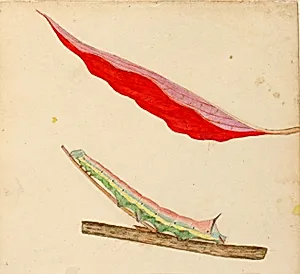
"Mirror-Back" Caterpillar, study for book Concealing Coloration in the Animal Kingdom
Medium
Painting
Classification
Painting
Department
Smithsonian Collection
Museum
Smithsonian American Art Museum
Credit
Smithsonian American Art Museum, Gift of the heirs of Abbott Handerson Thayer
Accession Number
1950.2.20B
Rights
Public Domain
Tags
Art Historical Context
Behold the intricate "Mirror-Back" Caterpillar, a captivating painting by Gerald H. Thayer, created as a study for his father Abbott Handerson Thayer's groundbreaking 1909 book, *Concealing Col in the Animal Kingdom*. work captures a caterpillar's masterful camouflage, mimicking a leaf with its "mirror-back" patterning—a natural illusion that blends seamlessly into its surroundings. Displayed in the Smithsonian American Art Museum, exemplifies early 20th-century scientific, where art served as a precise tool to reveal nature's hidden defenses. Gerald Thayer, working in a hyper-realistic style honed for natural history, employed meticulous brushwork to highlight countershading and disruptive coloration—theories pioneered by the Thayer family that explained how animals evade predators. This painting contributed to a pivotal shift in biology and art, influencing military camouflage during World War I. Abbott's heirs gifted it to the Smithsonian, preserving this family's legacy at the intersection of aesthetics and science. Visitors will marvel at how Thayer's keen observation turns a humble insect into a lesson in deception, inviting us to look closer at the wild world's subtle artistry.