
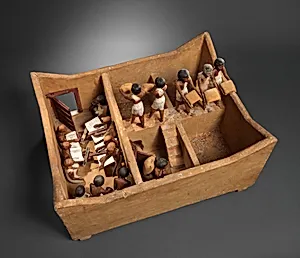
Model of a Granary with Scribes
Unknown Artist
ca. 1981–1975 B.C.
Medium
Wood, plaster, paint, linen, grain
Dimensions
L. 74.9 (29 1/2 in); W. 56 cm (22 1/16 in); H. 36.5 (14 3/8 in); average height of figures: 20 cm (7 7/8 in.)
Classification
Model, granary, Meketre
Period
Middle Kingdom
Department
Egyptian Art
Museum
Metropolitan Museum of Art, New York, NY
Credit
Rogers Fund and Edward S. Harkness Gift, 1920
Accession Number
20.3.11
Rights
Public Domain
Tags
Art Historical Context
Step into the bustling world of ancient Egypt with this exquisite *Model of a Granary Scribes*, crafted around 1981–1975 B.C. during Dynasty 12 of the Middle. Unearthed from the tomb of Meketre, a wealthy chancellor and treasurer to pharaohs like Mentuhotep II and Senwosret I, this wooden model vividly captures everyday administrative life. Tiny scribes, averaging 20 cm tall, sit poised with reed pens and papyrus, meticulously recording grain pouring from granary doors tended by workers— a snapshot of Egypt's efficient bureaucracy and agricultural wealth. Fashioned from wood coated in plaster, then brightly painted and detailed with real linen and grain, the model exemplifies Middle Kingdom artistry. These techniques allowed for remarkable realism in miniature, with figures in dynamic poses reflecting the era's idealized proportions and vibrant polychromy. Measuring about 75 cm long, it was one of many such models buried with Meketre to magically provision his afterlife, ensuring eternal abundance. Housed in the Metropolitan Museum of Art's Egyptian Art department (Rogers Fund and Edward S. Harkness Gift, 1920), this artifact offers profound cultural insight. It highlights the Middle Kingdom's economic prosperity and the scribe's revered role in society, bridging the mortal world and eternity through meticulous craftsmanship. A true treasure for pondering ancient ingenuity!