
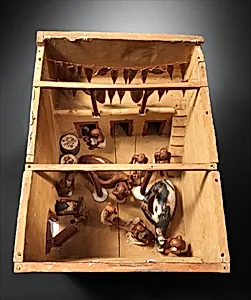
Model of a Slaughter House
Unknown Artist
ca. 1981–1975 B.C.
Medium
Wood, paint, plaster
Dimensions
L. 76.8 cm (30 1/4 in.); W. 58.5 cm (23 1/16 in.); greatest H. 58.5 cm (23 1/16 in.)
Classification
Model, Butcher, Meketre, slaughter, cows, cattle
Period
Middle Kingdom
Department
Egyptian Art
Museum
Metropolitan Museum of Art, New York, NY
Credit
Rogers Fund and Edward S. Harkness Gift, 1920
Accession Number
20.3.10
Rights
Public Domain
Tags
Art Historical Context
This wooden model of a slaughterhouse, created during Egypt’s Middle Kingdom under Dynasty 12, comes from the tomb of the chancellor Meketre. Such models were buried with the deceased to magically supply food and provisions in the afterlife, ensuring the tomb owner’s continued well-being. The miniature scene captures the bustling activity of a cattle-processing yard, complete with figures of men and animals rendered in painted wood and plaster. Measuring roughly 77 centimeters long, the model offers a vivid snapshot of daily life and economic organization in ancient Egypt. Its careful construction—using wood for structure, plaster for detail, and bright pigments for color—reflects the high level of craftsmanship invested in funerary furnishings. These Meketre models are celebrated for their lively, three-dimensional storytelling, giving modern viewers an intimate glimpse into the agricultural and ritual practices of the period. As part of the Metropolitan Museum’s renowned collection of Middle Kingdom tomb models, this piece highlights the ancient Egyptians’ belief that images and replicas could sustain the spirit eternally. It stands as both an artistic treasure and a valuable historical document of provisioning and labor in pharaonic society.