
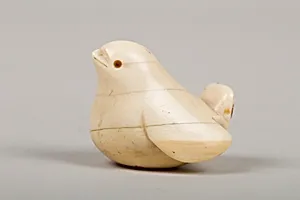
Netsuke of Bird
Unknown Artist
19th century
Medium
Ivory
Dimensions
H. 1 1/8 in. (2.9 cm); W. 1 1/4 in. (3.2 cm); D. 1 in. (2.5 cm)
Classification
Netsuke
Culture & Period
Japan · Edo (1615–1868) or Meiji period (1868–1912)
Department
Asian Art
Museum
Metropolitan Museum of Art, New York, NY
Credit
Gift of Mrs. Russell Sage, 1910
Accession Number
10.211.64
Rights
Public Domain
Tags
Art Historical Context
This exquisite *Netsuke of Bird* is a prime example of Japan's masterful miniature sculpture tradition from the 19th century, crafted during the late Edo period (1615–1868) or early Meiji era (1868–1912). Netsuke were ingenious toggles worn on kimono sashes to secure inro pouches—small lacquered boxes for medicine, tobacco, or seals. As practical objects evolved into coveted art, they captured everyday life, nature, and folklore in astonishing detail, reflecting the era's blend of functionality and aesthetic refinement. Carved from ivory, this tiny bird measures just 1 1/8 inches high (2.9 cm), 1 1/4 inches wide (3.2 cm), and 1 inch deep (2.5 cm), showcasing the carver's virtuosity in rendering feathers, beak, and posture on such a petite scale. Ivory's smooth, workable quality allowed for intricate textures and a lifelike sheen, often polished to mimic life. Birds were popular motifs in netsuke, symbolizing freedom or seasonal beauty in Japanese culture. A generous gift from Mrs. Russell Sage in 1910, this piece now graces the Metropolitan Museum of Art's Asian Art collection, inviting visitors to marvel at how everyday accessories became enduring symbols of Edo-Meiji artistry.