
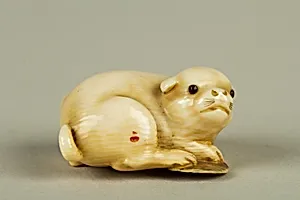
Netsuke of Dog
Unknown Artist
19th century
Medium
Ivory
Dimensions
H. 3/4 in. (1.9 cm); W. 1 1/4 in. (3.2 cm); D. 1 in. (2.5 cm)
Classification
Netsuke
Culture & Period
Japan · Edo (1615–1868) or Meiji period (1868–1912)
Department
Asian Art
Museum
Metropolitan Museum of Art, New York, NY
Credit
Gift of Mrs. Russell Sage, 1910
Accession Number
10.211.6
Rights
Public Domain
Tags
Art Historical Context
This charming *Netsuke of Dog*, carved from ivory in 19th-century Japan, exemplifies the exquisite craftsmanship of these tiny toggles. Measuring just 3/4 inch high, 1 1/4 inches wide, and 1 inch deep it was designed to secure inro (small lacquered medicine or tobacco pouches) to a kimono sash, serving both practical and decorative purposes during the Edo1615–1868) or early Meiji (1868–1912) period. Netsuke like this one emerged as functional art in urban Edo society, where men carried pouches without pockets. Ivory, prized for its smooth carvability and warm patina, allowed artisans—often anonymous masters—to sculpt intricate details, capturing the dog's alert expression, textured fur, and playful stance with remarkable precision. Dogs were popular motifs, symbolizing loyalty and good fortune in Japanese culture. Today, this piece graces the Metropolitan Museum of Art's Asian Art collection, a generous 1910 gift from Mrs. Russell Sage. It invites us to appreciate how everyday objects became miniature sculptures, blending utility, whimsy, and artistry in Japan's rich tradition.