
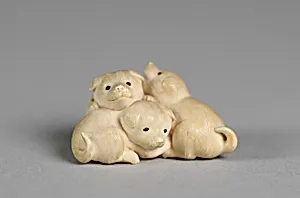
Netsuke of Three Puppies
Unknown Artist
18th century
Medium
Ivory
Dimensions
H. 7/8 in. (2.2 cm); W. 1 5/8 in. (4.1 cm)
Classification
Netsuke
Culture & Period
Japan · Edo period (1615–1868)
Department
Asian Art
Museum
Metropolitan Museum of Art, New York, NY
Credit
Gift of Mrs. Russell Sage, 1910
Accession Number
10.211.775
Rights
Public Domain
Tags
Art Historical Context
Nestled in the Metropolitan Museum of Art's Art collection, this charming *Netsuke of Three Puppies is a delightful 18th-century ivory from Japan's Edo period (16151868). Measuring just 7/8 inches high and 1 5/8 inches wide, exemplifies the netsuke tradition—tiny toggles worn on inro (small lacquered cases) to secure them to kimono sashes, as traditional Japanese attire lacked pockets. Crafted by an unknown artist, its diminutive scale belies the exquisite detail, capturing three playful puppies in a tumbling heap, evoking joy and whimsy. Ivory was a prized medium for netsuke due to its creamy translucency and suitability for intricate carving techniques, allowing artists to render lifelike fur, expressive faces, and dynamic poses with remarkable precision using specialized tools. During the Edo era, a time of urban prosperity and cultural flourishing among merchants and samurai, netsuke evolved from functional objects into coveted art forms, often featuring animals symbolizing good fortune or domestic delight—like these endearing dogs, which may represent loyalty and companionship in Japanese folklore. Gifted to the Met in 1910 by Mrs. Russell Sage, this piece invites visitors to marvel at the mastery of miniature sculpture, bridging everyday utility with artistic brilliance in Edo Japan. Hold it in your palm, and feel the lively spirit of centuries past!