
Nobleman and Warrior
19th century
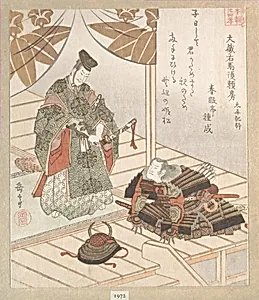
Medium
Woodblock print (surimono); ink and color on paper
Dimensions
7 3/4 x 6 1/2 in. (19.7 x 16.5 cm)
Classification
Prints
Culture & Period
Japan · Edo period (1615–1868)
Department
Asian Art
Museum
Metropolitan Museum of Art, New York, NY
Credit
H. O. Havemeyer Collection, Bequest of Mrs. H. O. Havemeyer, 1929
Accession Number
JP1972
Rights
Public Domain
Tags
Art Historical Context
Behold *Nobleman and Warrior*, a exquisite 19th-century woodblock print (surimono) by Yashima Gaki, a master of ukiyo-e tradition during Japan's Edo period (1615–1868). This work, measuring just 7 3/4 x 6 1/2 inches, captures two figures in traditional attire—complete with helmets and swords—evoking the valor and elegance of samurai culture. Surimono like this were commissioned gems, often for poetry gatherings New Year's celebrations, showcasing Gakutei's skill in fine-line carving and vibrant color layering on paper. Gakutei's style blends realism with poetic refinement, highlighting the nobleman's poised stance and the warrior's dynamic presence against a subtle background. Woodblock printing techniques allowed for meticulous details, from the metallic sheen of armor to the flowing fabrics, making each impression a collector's treasure. These prints celebrated Japan's warrior class amid a time of relative peace, when samurai ideals were romanticized in art. From the renowned H. O. Havemeyer Collection at the Metropolitan Museum of Art, this piece invites us to ponder the enduring allure of bushido spirit—honor, discipline, and artistry intertwined. A perfect glimpse into Edo Japan's cultural splendor!
About the Artist
Yashima Gakutei · 1786–1868
Yashima Gakutei (c. 1786–1868), born in Osaka as the illegitimate son of a Tokugawa shogunate samurai named Hirata, adopted the name from his mother's subsequent marriage into the Yashima clan. Little is documented about his early years beyond these familial ties, but he pursued artistic training under the esteemed ukiyo-e masters Totoya Hokkei and Katsushika Hokusai, absorbing their precision in ...