
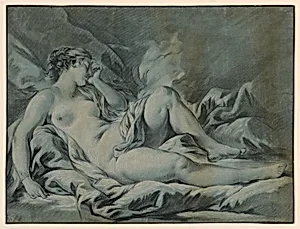
Nude Woman Sleeping
Classification
Department
Smithsonian Collection
Museum
Smithsonian American Art Museum
Credit
Gift of Eleanor and Sarah Hewitt
Accession Number
1931-64-134
Rights
Public Domain
About this artwork
Research in Progress
Art Historical Context
Gilles Demarteau (1722–1776), a skilled Flemish engraver active in Paris during the Rococo era, created *Nude Woman Sleeping* 1770. As part of the Smithsonian American Art's collection—generously gifted by Eleanor and Sarah Hewitt print exemplifies Demarteau's mastery in reproductive engraving, often inspired by the sensual paintings of contemporaries like François Boucher. Rococo art celebrated playful elegance and the female form, blending intimacy with decorative grace amid Europe's Enlightenment salons. Though the exact medium remains under research, its classification as a print highlights 18th-century innovations in printmaking. Demarteau pioneered the "crayon manner" technique, mimicking soft chalk drawings to achieve velvety textures and luminous effects unattainable in traditional etching. Prints like this democratized high art, allowing collectors across social strata to own intimate scenes of repose and vulnerability. This serene nude reflects broader cultural shifts: as neoclassicism loomed, Rococo's erotic reverie offered a final flourish of Baroque sensuality. Imagine it adorning a gentleman's cabinet, sparking whispered admiration— a testament to art's power to capture quiet beauty. (198 words)