
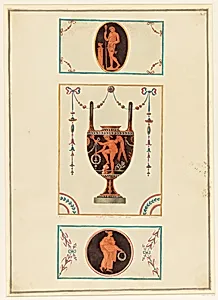
Ornament Design with Urn and Cameos
Medium
Drawing
Classification
Drawing
Department
Smithsonian Collection
Museum
Smithsonian American Art Museum
Credit
Gift of Unknown Donor
Accession Number
1980-32-1475
Rights
Public Domain
About this artwork
Research in Progress
Art Historical Context
**Ornament Design with Urn and Cameos** *Michel Angelo Pergolesi (Italian, active ca. 1760–1801), 1777* *Drawing; Smithsonian American Art Museum, Gift of Unknown Donor* Created in 1777 by Italian artist Angelo Pergolesi, delicate drawing exemplifies the ornamental designs that flourished in late 18th-century Europe. Pergolesi, active during a period of artistic exchange between Italy and Britain, specialized in intricate patterns inspired by antiquity. The title reveals classical motifs—an elegant urn and cameos—that evoke the Neo-classical revival, drawing from ancient Greek and Roman artifacts to symbolize grace, memory, and eternal beauty. As a preparatory drawing, the work highlights the technical precision of the medium: fine lines and subtle shading allowed designers like Pergolesi to refine motifs for ceramics, furniture, or architecture. These patterns influenced the decorative arts during the Enlightenment, blending scholarly rediscovery of ruins with fashionable interiors. Though research on this piece is ongoing, it offers a window into how artists bridged cultures, exporting Italian elegance to international markets. Housed in the Smithsonian American Art Museum, this gifted treasure invites visitors to appreciate the artistry behind everyday ornamentation, reminding us of design's power to connect past and present.