
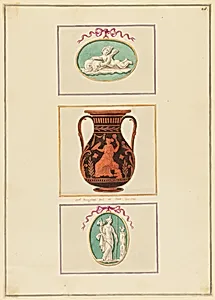
Ornament Design with Vase and Cameos
Medium
Drawing
Classification
Drawing
Department
Smithsonian Collection
Museum
Smithsonian American Art Museum
Credit
Gift of Unknown Donor
Accession Number
1980-32-1455
Rights
Public Domain
About this artwork
Research in Progress
Art Historical Context
**Ornament Design with Vase and Cameos** Michel Angelo Pergolesi (Italian, active ca.1760–1801), 1776* *Drawing; Smithsonian American Art Museum, Gift of Unknown Donor* into the elegant world of 18th Italian design with this delicate drawing by Michel Angelo Pergolesi, created in 1776. Titled *Ornament Design with V and Cameos*, it a central vase adorned with cameos—intimate carvings popular for their classical motifs—surrounded by intricate ornamental patterns. As a skilled practitioner active from around 1760 to 1801, Pergolesi contributed to the rich tradition of decorative arts during a time when Italy's artistic output influenced European tastes in luxury goods. This drawing exemplifies the preparatory role of sketches in ornamental design, serving as a precise blueprint for engravers, silversmiths, and furniture makers. In the late Enlightenment era, such works bridged fine art and craft, emphasizing symmetry, detail, and refinement amid shifting styles from opulent Rococo toward neoclassical restraint. The medium of drawing allowed Pergolesi to refine motifs with pencil or ink, ensuring their adaptability across media like ceramics or architecture. Housed in the Smithsonian American Art Museum's collection—thanks to a generous unknown donor—this piece awaits further research, inviting visitors to ponder the hidden artistry behind everyday splendor. A testament to Italian ingenuity, it reminds us how ornament elevated the ordinary into the extraordinary.