
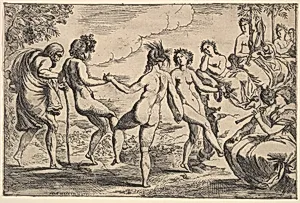
Orpheus
1610–42
Medium
Etching
Dimensions
5 1/2 x 8 1/4 in. (13.9 x 21 cm)
Classification
Prints
Department
Drawings and Prints
Museum
Metropolitan Museum of Art, New York, NY
Credit
Gift of Georgiana W. Sargent, in memory of John Osborne Sargent, 1924
Accession Number
24.63.1116(60)
Rights
Public Domain
Tags
Art Historical Context
Behold Pierre Brebiette's *Orpheus*, a delicate etching from his active years around 1610–42, measuring a modest 5½ × 8¼ inches. This print captures the legendary musician Orpheus from Greek mythology, famed for his lyre that enchanted animals, nature, and even the underworld Surrounded by musical instruments and nude male and female figures, the composition evokes the timeless power of music to harmonize the human and divine. As a French artist working in the early Baroque era, Brebiette excelled in printmaking, using etching—a technique where acid etches intricate lines into a metal plate—to create finely detailed, reproducible images. Prints like this were vital in the 17th century, allowing widespread appreciation of classical myths amid Europe's artistic shift from Mannerist elegance to more dramatic expression. Housed in the Metropolitan Museum of Art's Drawings and Prints department, it reflects the era's fascination with antiquity and the nude form as symbols of beauty and emotion. This intimate work invites visitors to ponder Orpheus's poignant tale—his music's triumph and tragic loss—while marveling at etching's precision in rendering soft contours and dynamic poses. A gift in memory of John Osborne Sargent, it bridges centuries, reminding us of art's enduring melody.
About the Artist
Pierre Brebiette · 1598–1642
Pierre Brébiette (c. 1598–c. 1642) was a French painter and etcher whose elegant, sensuous treatment of classical mythology and allegory earned him a significant reputation in early seventeenth-century Paris. Born in Mantes-sur-Seine, Brébiette traveled to Italy as a young man and lived and worked in Rome from around 1617 to approximately 1625, absorbing the influences of ancient sculpture, Renais...