
Paardenstaart-haar
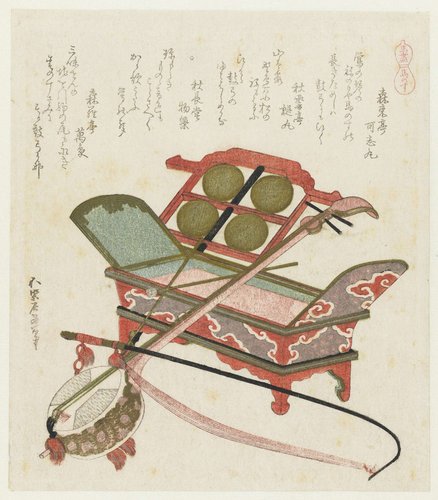
Medium
nishikie, with metallic pigments and tsuyazuri
Dimensions
211; 184
Rights
Public Domain
About this artwork
collector's mark, verso, stamped: Lugt 2228
Art Historical Context
**Paardenstaart-haar Katsushika Hokus (1822)** Katsushika Hokus, the legendary Japanese ukiyo-e master, created *Paardenstaart-ha* in 1822, during his prolific middle years when he was revolutionizing woodblock printing. This intimate print, measuring just 211mm high by 184mm wide, exemplifies nishikie—or "brocade picturesrenowned for their vibrant, multi-colored layers achieved through intricate woodblock techniques. Hokusai's work captures the fleeting beauty of everyday life, often blending humor, nature, and human elegance in the floating world of ukiyo-e. The medium shines literally here: metallic pigments add a luxurious sparkle, while tsuyazuri—a glossy varnish effect—creates shimmering highlights that mimic dew or silk, enhancing the print's tactile allure. Likely a surimono (commissioned private print), it reflects Edo-period Japan's refined connoisseurship, where such embellishments elevated art from mass production to bespoke treasures. The title, evoking a playful ponytail hairstyle, hints at Hokusai's fascination with fashion and femininity. Bearing a collector's mark (Lugt 2228) on the verso, this piece traces its journey through esteemed European collections, underscoring Hokusai's global legacy—from inspiring Impressionists like Monet to modern design. A gem of technical virtuosity and cultural whimsy!
About the Artist
Katsushika Hokusai · 1760–1849
Katsushika Hokusai (1760-1849) stands as one of history's most influential artists, a Japanese master who revolutionized the ukiyo-e woodblock print tradition and profoundly shaped Western art. Born in the Katsushika district of Edo (modern-day Tokyo) to an artisan family, Hokusai lived through nearly nine decades of extraordinary creative evolution, adopting over thirty different artistic names t...