
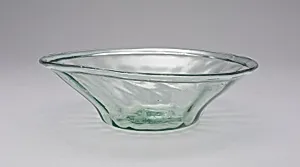
Pan
c. 1825
Medium
Mold-blown glass
Dimensions
H.: 17.8 cm (7 in.)
Classification
container
Department
Arts of the Americas
Museum
Art Institute of Chicago
Accession Number
76782
Rights
Public Domain
Art Historical Context
Behold the enchanting *Pan*, a mold-blown glass container from circa 1825, standing at a modest 7 inches tall. Crafted in the Arts of the Americas tradition, this whimsical piece depicts the Greek god Pan—half-man, half-goat, with his signature horns, pointed ears, and playful pipes—frozen in a lively pose. As a functional yet decorative vessel, it likely served as a flask, scent bottle, or whimsey, blending utility with mythology. Mold-blown glass, a technique perfected in early 19th-century American factories, marked a leap in glassmaking innovation. Molten glass was blown into intricate metal molds, allowing for detailed patterns and figural shapes impossible with free-blowing alone. This method flourished in regions like New England, reflecting America's growing industrial prowess and neoclassical fascination with ancient motifs amid the young republic's cultural aspirations. Though the artist remains unknown, *Pan*'s spirited form captures the era's delight in classical revival, infusing everyday objects with mythological charm. A testament to American ingenuity, it invites visitors to ponder how 1825 artisans transformed humble glass into a vessel of wonder and revelry.