
Panel
c. 1730
Medium
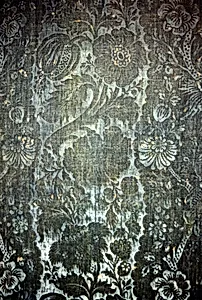
Wool and linen, plain weave with supplementary pile warps forming cut solid velvet; stamped; of a type known as "velours de trek"
Dimensions
242.3 × 66.1 cm (95 3/8 × 26 in.); Warp repeat: H.: 68.6 cm (27 in.)
Classification
textile
Department
Textiles
Museum
Art Institute of Chicago
Accession Number
150166
Rights
Public Domain
Art Historical Context
This exquisite textile panel, dating to around 1730, showcases the artistry of anonymous European weavers specializing in luxury fabrics. Crafted from wool and linen using a plain weave with supplementary pile warps that form a lush cut solid velvet, it exemplifies "velours de trek"—a sophisticated technique where patterns are created by stamping and selective pile cutting. Measuring nearly eight feet long and just over two feet wide, with a repeating warp height of 27 inches, the panel was likely designed for grand interiors, such as upholstery or wall hangings in opulent homes. The stamped patterning and velvet pile highlight 18th-century innovations in textile production, particularly from regions like the Netherlands or Flanders, where such velvets were prized for their durability and rich texture. Velvet's pile, formed by cutting looped warps, created a velvety depth that caught light beautifully, symbolizing wealth and refinement during the Rococo era's love for ornate decoration. Though the artist remains unknown, this panel's preservation at the Art Institute of Chicago offers a tactile glimpse into everyday luxury of the time. Visitors can appreciate how these textiles bridged craftsmanship and commerce, transforming humble wool and linen into status symbols that adorned Europe's elite spaces.
About the Artist
Unknown
The artist designated as "Unknown" in our virtual museum's collection exemplifies a poignant chapter in art history: creators whose identities have faded into obscurity despite the enduring power of their work. With only one known artwork attributed to them in our holdings, this figure represents countless anonymous hands that shaped visual culture across centuries. Museums worldwide, including th...