
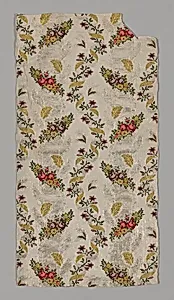
Panel from a Skirt
c. 1753/55
Medium
Silk, gilt-and-silvered-metal strip, and gilt-metal-strip-wrapped silk, plain weave with patterning and brocading wefts
Dimensions
100.2 × 52 cm (39 3/8 × 20 1/2 in.); Warp repeat: H.: 34 cm (13 3/8 in.)
Classification
textile
Department
Textiles
Museum
Art Institute of Chicago
Accession Number
153659
Rights
Public Domain
Art Historical Context
This exquisite *Panel from a Skirt dating to around 1753–55, offers a glimpse into the op world of mid-18th-century textiles. Crafted from silk combined with gilt- and silvered-metal strips and gilt-metal-strip-wrapped silk, this100.2 × 52 cm fragment was likely part of a lavish garment, showcasing the era's fascination with shimmering luxury fabrics. Housed in the Art Institute of Chicago's Department, it exemplifies how textiles were not just functional but profound expressions of wealth and style. The panel's construction—plain weave enhanced by patterning and brocading wefts—highlights masterful weaving techniques. Brocading involves supplementary wefts that float across the surface to create intricate motifs, here elevated by metallic threads that catch the light, mimicking jewelry woven into cloth. This labor-intensive process was a hallmark of high-end fashion in Europe during the Rococo period, where such skirts adorned the elite at courtly events. Today, this survivor transports us to a time when textiles rivaled paintings in artistry. Its repeating warp pattern (34 cm high) hints at a larger, symmetrical design, inviting us to imagine the full skirt swaying in a candlelit ballroom—a testament to the anonymous artisans whose skill turned silk into splendor.
About the Artist
Unknown
The artist designated as "Unknown" in our virtual museum's collection exemplifies a poignant chapter in art history: creators whose identities have faded into obscurity despite the enduring power of their work. With only one known artwork attributed to them in our holdings, this figure represents countless anonymous hands that shaped visual culture across centuries. Museums worldwide, including th...