
Panel piece
Qing dynasty (1644–1911), 1800/50
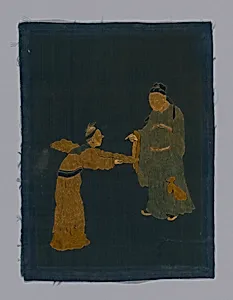
Medium
Satin, with couched cord
Dimensions
25.8 × 19.3 cm (10 1/8 × 7 1/2 in.)
Classification
textile
Department
Textiles
Museum
Art Institute of Chicago
Accession Number
238514
Rights
Public Domain
Art Historical Context
This exquisite *Panel piece* from China's Qing dynasty (16441911), dating to around 18001850, exemplifies the era's mastery of luxurious textiles. Crafted from shimmering satin—a fine silk weave prized for its smooth luster and drape—this small panel (25.8 × 19.3 cm) likely served as a decorative element for garments, screens, or furnishings in elite households. During the Qing period, textile arts flourished under imperial patronage, reflecting the dynasty's prosperity and cultural refinement. The standout technique here is couched cord embroidery, where thick cords or threads are meticulously laid onto the satin surface and secured with fine stitches, creating a raised, tactile dimensionality. This labor-intensive method, rooted in centuries-old Chinese traditions, added opulence and texture, often highlighting motifs like flowers, dragons, or auspicious symbols (though specifics on this piece's design remain undocumented). It showcased artisans' skill in balancing shine, relief, and color for visual impact. Housed in the Art Institute of Chicago's Textiles Department, this anonymous work invites us to appreciate Qing textile innovation—bridging functionality and artistry in everyday luxury. A testament to forgotten craftspeople, it whispers of a world where silk told stories of status and beauty.
About the Artist
Unknown
The artist designated as "Unknown" in our virtual museum's collection exemplifies a poignant chapter in art history: creators whose identities have faded into obscurity despite the enduring power of their work. With only one known artwork attributed to them in our holdings, this figure represents countless anonymous hands that shaped visual culture across centuries. Museums worldwide, including th...